Frequently Asked Questions (FAQ) About Roof Guardrail Systems
1. What is a roof edge protection system and why is it important for rooftop safety?
Roof edge protection is a type of fall protection system that provides a physical barrier at the roof edge, helping prevent workers from falling. It forms part of a wider category known as collective edge protection, which is prioritised under the height regulations for its ability to protect multiple workers without the need for specialised equipment or training. For a plain-English introduction, read our guide What Is Roof Edge Protection? A Simple Guide.
2. Is Kee Guard® suitable for all roof types?
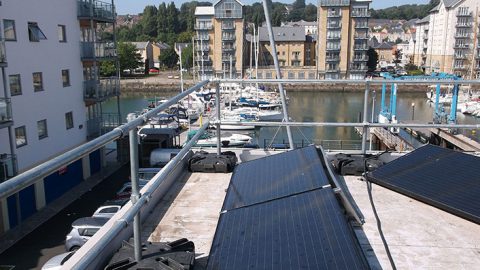
Yes, the Kee Guard® roof edge protection system is designed with a modular design that can be adapted for a wide variety of roof types, including flat roofs, low-slope roofs, and metal profiles. KeeGuard also includes options for limited space areas and rooftops with aesthetic considerations, making it a truly flexible and ideal solution.
3. Does Kee Guard® require drilling into the roof surface?
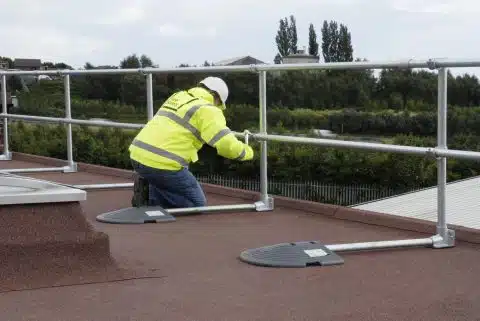
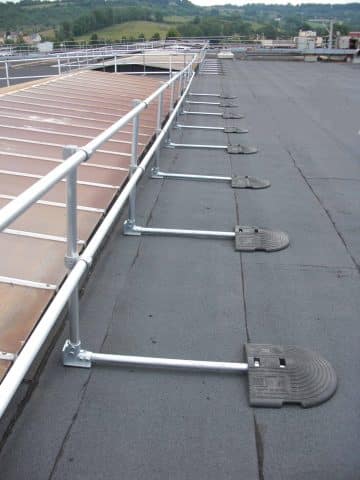
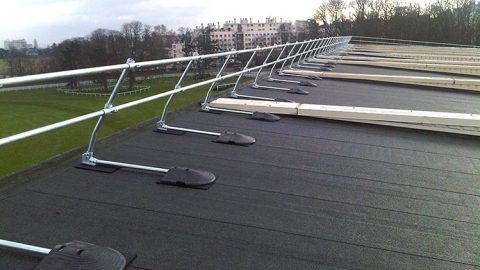
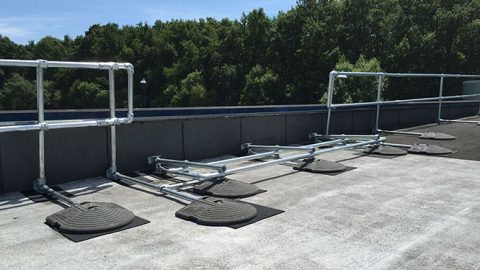
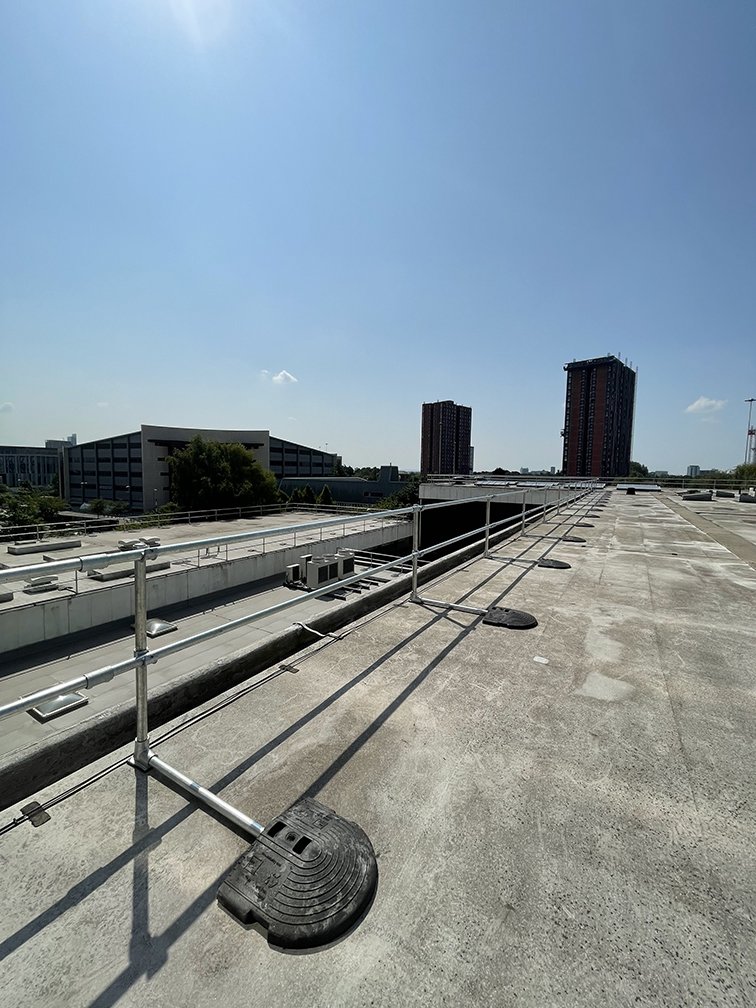
No – Kee Guard® is a freestanding roof edge protection system, which means it avoids drilling or penetrating the roof membrane. This helps preserve the roof’s integrity, reduces the risk of leaks, and ensures the system is both temporary and permanent, depending on your site requirements.
4. What safety standards does the Kee Guard® system comply with?
Kee Guard meets a full range of safety standards, including EN ISO 14122 Part 3, EN 13374 Class A, BS 13700:2021, and BS EN 1991-1-4. These standards ensure the system is tested to withstand wind loads and rooftop conditions, keeping workers protected while complying with UK height regulations.
5. Can the Kee Guard® roof edge protection system be colour-matched to the building?
Yes. Kee Guard components can be powder coated in any RAL colour, offering a discreet solution for buildings where aesthetics matter. This makes it particularly suitable for sites with public visibility or sensitive architectural requirements.
6. What kind of maintenance and inspection is required after installation?
Although Kee Guard® is a low-maintenance system, regular inspection by a qualified team is recommended to ensure ongoing compliance with safety standards. These checks help ensure that the protection system remains secure and effective over time.
7. What roof pitches can Kee Guard® be fitted to?
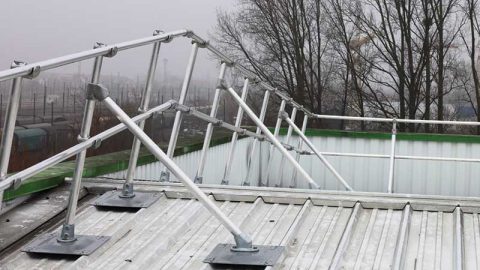
Freestanding Kee Guard® can be fitted to concrete, asphalt, PVC, membrane and felt roofs with a pitch of up to 10°. For metal profile and standing seam roofs, Kee Guard® Top Fix provides roof edge protection on pitches of up to 45°.
8. What standard covers permanent roof edge protection?
BS 13700:2021 covers freestanding, counterweighted guardrail that stays in place permanently. It requires site-specific wind calculations for each installation, a System Technical File for the building owner, and an annual inspection. Kee Guard® is certified to BS 13700:2021.
6 Reasons Kee Guard® Is the Ideal Roof Guardrail System
-
Freestanding Design
– No penetration of the roof surface or membrane, making it perfect for flat and low-slope roofs.
-
Quick and Easy Installation
– Kee Guard’s modular design ensures fast deployment without the need for hot works or welding.
-
Compliant with UK & International Standards
– Built to meet the most rigorous BS EN and height regulations for fall protection.
-
Adaptable to Complex Roof Configurations
– A full range of options including Topfix, Premium, and Foldshield means it’s suitable for virtually any roof type.
-
Aesthetic and Functional Flexibility
– Optional powder coating allows the system to blend with the building while providing strong edge protection.
-
Trusted by Safety Professionals Across the UK
– Backed by a qualified installation team, regular inspection options, and decades of real-world experience in rooftop safety.